The Strategic Case for a Selective Multi-Platform Presence

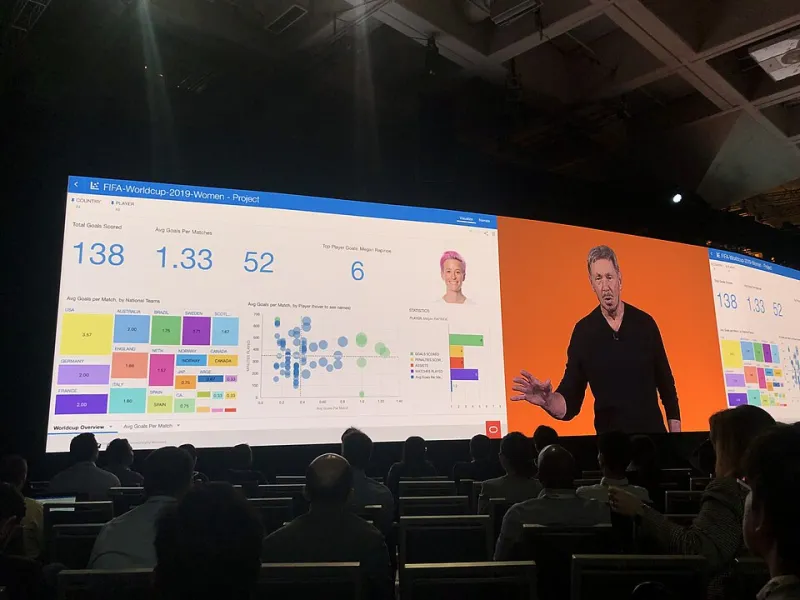
Photo: Ministry of Social Justice and Empowerment, GODL-India, via Wikimedia Commons
Why the Consolidation Conversation Has a Blind Spot
Over the past several years, a clear consensus has formed in creator communities and media strategy circles: do less, but do it better. Focus on one or two platforms. Resist the pressure to be everywhere. Consolidate your resources and go deep rather than wide.
This advice is sound—for some creators, in some circumstances. But it has also created a secondary problem. In the rush to avoid the chaos of ten-platform distribution, a growing number of creators have overcorrected, retreating to a single channel and inadvertently narrowing their audience reach to a degree that limits long-term growth.
The answer, for many publishers and creators, is neither extreme. It is a carefully constructed presence across three to five platforms, each chosen for a specific reason and maintained with a defined level of investment. This is not a compromise position. It is a strategic one.
Understanding Why Audiences Fragment
Before selecting platforms, it is worth understanding the underlying dynamic that makes selective multi-channel distribution necessary in the first place.
Audiences in the United States increasingly segment their media consumption by content type, context, and intent. A professional who follows your work on LinkedIn is not likely to seek you out on TikTok—and vice versa. A podcast listener may never visit your website. A YouTube subscriber may not be reachable via email. These are not the same person consuming content in different locations; they are often genuinely different people with different needs and habits.
If your content has legitimate value across more than one of these contexts—and for most creators with diverse output, it does—then a single-platform strategy means voluntarily leaving segments of your potential audience unreached. That is a strategic choice, and it should be made consciously rather than by default.
The Three-to-Five Platform Model: What It Is and What It Is Not
A selective multi-platform presence is not a scaled-down version of posting everywhere. The distinction lies in intentionality.
In a broad-distribution approach, the question is: where can we post this? In a selective multi-platform approach, the question is: where does this content format serve a specific audience segment, and what does each platform contribute to our overall distribution goals?
This reframing changes everything about how platforms are chosen and maintained.
Platform selection should follow content format, not the reverse. If you produce long-form video, YouTube and a podcast feed may be natural anchors. If you produce analytical written content, a newsletter and LinkedIn may serve your professional audience better than any short-form video platform. Adding a third or fourth platform makes sense only when you have a content format that genuinely suits that channel and an audience segment that genuinely lives there.
Each platform should have a defined role. One platform may function as your primary discovery engine—the place where new audiences encounter your work for the first time. Another may serve as a depth channel, where your most engaged followers consume long-form content. A third might function as a conversion pathway, directing audiences toward a newsletter, a course, or a product. When every platform has a purpose, the overall system becomes coherent rather than redundant.
Matching Content Formats to Platform Strengths
Not all content performs equally across channels, and understanding these dynamics is central to building a selective multi-platform strategy that actually works.
Long-form written content performs best on owned channels—newsletters and websites—as well as on platforms designed for professional audiences, such as LinkedIn. The audiences on these channels are more likely to invest time in reading, and the platforms themselves support longer content without penalizing it.
Short-form video remains most effective on platforms built around discovery and passive consumption. YouTube Shorts, Instagram Reels, and TikTok all function as awareness tools—they introduce your content to people who were not actively looking for it. For creators whose primary content is not video, short-form clips can still serve as a distribution channel for repurposed material, provided the production overhead is manageable.
Audio content via podcast feeds occupies a unique position in the distribution landscape. Podcast listeners tend to be highly loyal, consume content during otherwise unproductive time—commutes, exercise, household tasks—and are notably resistant to the kind of algorithmic disruption that affects visual platforms. For creators with the capacity to produce audio, a podcast feed offers a stable, algorithm-independent distribution route.
Community-driven platforms such as Reddit, Discord, or niche forums serve a different function altogether. Rather than functioning as broadcast channels, they facilitate conversation around your content. For creators whose work generates strong audience engagement, a community channel can deepen loyalty and extend the lifespan of individual pieces.
Avoiding the Operational Pitfall
The reason broad multi-platform distribution fails is not that multiple platforms are inherently unmanageable. It is that creators attempt to maintain the same publishing cadence and production quality across every channel simultaneously, without the systems or resources to sustain it.
A selective multi-platform strategy avoids this trap through tiered investment. Your primary platform—the one where your audience is most concentrated and where your content performs best—receives the majority of your production effort. Secondary platforms receive adapted or repurposed content, produced at lower marginal cost. Tertiary platforms, if maintained at all, operate on a minimal-touch basis, serving primarily as discovery or referral channels.
This tiering means that adding a second or third platform does not double or triple your workload. It increases it incrementally, in proportion to the specific role each channel is expected to play.
When Consolidation Is Still the Right Answer
A selective multi-platform approach is not appropriate for every creator or every stage of growth. For creators who are still developing their core content format, finding their audience, or operating with severely limited resources, consolidation remains the correct starting point. Building depth on a single platform before expanding is a sound strategy—provided the expansion is planned rather than reactive.
The key distinction is between consolidation as a permanent state and consolidation as a phase. For most creators with established content formats and identifiable audience segments, the transition to a selective multi-platform presence is not a risk. It is a logical next step.
Distribution With Purpose
The goal of any distribution strategy is not to maximize the number of channels you occupy. It is to ensure that your content reliably reaches the audiences most likely to value it, through the routes best suited to how those audiences consume content.
Three platforms chosen with precision will consistently outperform ten platforms managed without strategy. The question worth asking is not how many channels you are on—it is whether the channels you have chosen are working together toward a coherent distribution goal.
When the answer is yes, the number of platforms becomes secondary to the quality of the routes you have built.