Building Your Content Distribution Network: A Practical Framework for Reducing Algorithmic Dependency
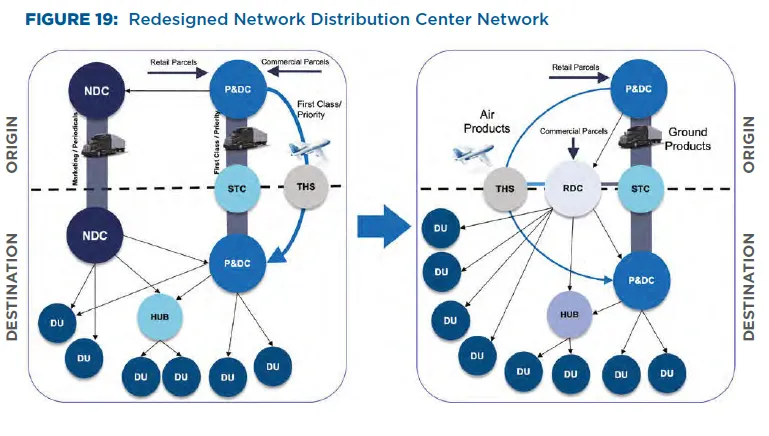
Photo: United States Postal Service, CC BY-SA 4.0, via Wikimedia Commons
Why Your Distribution Strategy Needs Redundancy
Every experienced creator has a version of the same story. A platform changes its algorithm. Organic reach drops overnight. An account gets flagged or suspended without clear explanation. Years of audience-building effort become suddenly inaccessible because the infrastructure was owned entirely by someone else.
This is not a hypothetical risk. It is a recurring reality in the US creator economy, and it underscores a fundamental principle that professional media distributors have understood for decades: no serious content operation should depend on a single delivery route. The most resilient distribution networks are built on diversification — multiple channels, multiple formats, multiple points of direct audience access.
The goal of this guide is to help creators and independent publishers design a distribution architecture that reduces algorithmic dependency while expanding the range of reliable routes to their audiences.
Understanding the Two Categories of Distribution Channels
Before mapping specific platforms, it is useful to distinguish between two fundamentally different categories of distribution infrastructure.
Rented channels are platforms you do not own or control. TikTok, Instagram, YouTube, X, and Facebook all fall into this category. These platforms offer significant reach potential and discovery advantages, but they also reserve the right to alter their algorithms, restrict your access, or cease operations entirely. Your audience on these platforms belongs, in a meaningful sense, to the platform rather than to you.
Owned channels are distribution routes over which you maintain direct control. Email newsletters, SMS lists, private communities hosted on your own domain, and podcast RSS feeds represent owned infrastructure. When someone subscribes to your newsletter or joins your private community, that relationship is yours to maintain regardless of what any third-party platform decides to do.
A well-designed distribution network incorporates both categories, using rented channels for discovery and audience growth while systematically converting that audience into owned-channel subscribers who can be reached directly.
Mapping the Primary Distribution Routes
Email Newsletters
Email remains one of the most effective owned-channel distribution mechanisms available to creators. Platforms such as Substack, Beehiiv, and ConvertKit have made professional newsletter publishing accessible to independent creators at every scale, offering monetization tools, subscriber analytics, and editorial infrastructure that would have required significant technical investment a decade ago.
Newsletters perform particularly well for creators whose audiences value depth over brevity — analysis, long-form commentary, industry insight, and curated resources. They are especially well-suited to professional and business-oriented audiences, where email remains the dominant communication format. For creators in finance, technology, health, policy, and B2B sectors, a strong newsletter list is frequently the most valuable distribution asset they own.
Podcast Networks and Audio Platforms
Podcasting occupies a unique position in the distribution landscape because the underlying RSS-based infrastructure is, by design, decentralized and creator-controlled. Publishing a podcast means distributing to Apple Podcasts, Spotify, Amazon Music, and dozens of other directories simultaneously through a single feed — a structural advantage that no social media platform replicates.
Podcasts build exceptionally loyal audiences. Edison Research data consistently shows that regular podcast listeners consume the majority of episodes they download, a completion rate that outperforms virtually every other content format. For creators whose subject matter benefits from extended, conversational treatment — storytelling, interviews, educational deep dives — podcasting represents a high-trust distribution route with strong monetization potential through sponsorships, premium subscriptions, and live events.
Discord and Private Community Platforms
Discord has evolved well beyond its gaming origins to become a serious community infrastructure platform for creators across virtually every content vertical. A well-managed Discord server functions as a direct-access channel to your most engaged audience members — people who have actively chosen to enter your community environment and participate in ongoing conversation.
The distribution value of a Discord community lies not in broadcast reach but in relationship depth. Members who participate regularly in a creator's Discord are typically among the highest-converting audience segments for paid products, memberships, and events. Platforms such as Circle and Geneva offer similar community functionality with interfaces better suited to non-gaming audiences.
Streaming and Video Platforms
YouTube occupies a hybrid position — it is a rented channel in terms of algorithmic control, but its search-driven discovery model gives it a durability that distinguishes it from purely feed-based platforms. Content published on YouTube can continue generating views and subscribers years after its original publication date, making it a more stable long-term distribution investment than platforms where content decays within 48 hours.
For creators targeting younger US demographics, streaming on Twitch or building a presence on emerging platforms such as Kick offers live-format distribution routes with strong community engagement characteristics.
A Decision Framework for Channel Selection
Not every distribution route is appropriate for every creator. The following framework is designed to guide channel selection based on three variables: content format, audience demographics, and business model.
Content format determines which channels can deliver your work without significant degradation. Long-form written analysis belongs on newsletters or Substack. Short, high-energy video content belongs on TikTok or YouTube Shorts. Conversational, relationship-driven content belongs on podcasts or community platforms. Forcing a format into an incompatible channel produces suboptimal results regardless of production quality.
Audience demographics determine where your specific readers, viewers, or listeners are actually concentrated. Creators targeting professionals aged 30 to 55 will find LinkedIn and email newsletters significantly more productive than TikTok. Creators targeting Gen Z audiences will find the inverse. Distribution strategy should follow audience behavior, not platform popularity rankings.
Business model determines which channels align with your revenue architecture. Creators monetizing through advertising need volume-driven platforms. Creators monetizing through direct subscriptions or premium products need owned channels with high engagement density. Creators monetizing through services or consulting need channels that establish authority and facilitate direct communication.
Building the Network Gradually
The transition from an algorithmically dependent distribution model to a resilient multi-channel network does not happen overnight. A practical approach involves establishing one strong owned channel — typically an email newsletter — as the foundation, then systematically using existing rented-channel audiences to drive subscription growth on that owned infrastructure.
Over time, additional routes can be added as resources and audience size justify the investment. The objective is not to occupy every available channel but to build a distribution network that delivers your content reliably to the audiences who value it most, through routes that you control and can sustain regardless of what any single platform decides to do next.
In an environment where algorithmic platforms continue to consolidate power over content visibility, the creators who invest in building their own distribution infrastructure today are the ones who will be best positioned to maintain audience access — and business continuity — for years to come.