Borrowed Audiences vs. Owned Audiences: Rethinking Where You Build Your Content Home

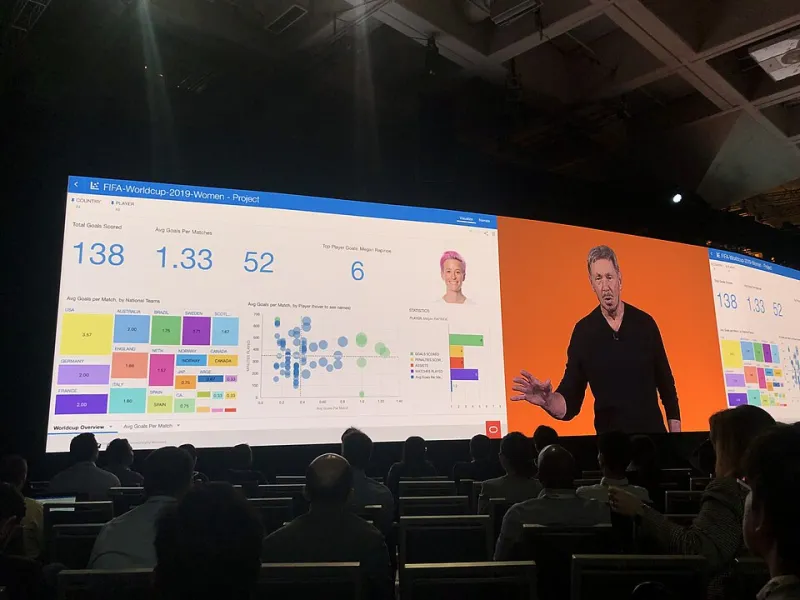
Photo: Alessandro Ludovico, CC BY-SA 3.0, via Wikimedia Commons
Every publisher faces a version of the same fundamental decision: distribute content through platforms that already have the audience, or invest in channels where the publisher controls the relationship entirely. Both paths have genuine merit. Both carry real risks. The mistake is not choosing one over the other—it is failing to understand what you are actually trading when you make that choice.
This is not an abstract philosophical question. It is a structural business decision with direct implications for revenue stability, audience data access, and long-term distribution resilience.
Defining the Models: Syndication and Native Publishing
Content syndication, in its broadest sense, refers to distributing material through third-party platforms or partner networks—whether that means republishing articles on Apple News, distributing video through YouTube, posting newsletters via LinkedIn, or licensing content to aggregators like Flipboard or SmartNews. The defining characteristic is that the platform intermediates the relationship between publisher and reader.
Native publishing—sometimes called owned distribution—means delivering content through channels the publisher controls directly: a proprietary website, a self-hosted email newsletter, a branded podcast feed, or a membership platform. The publisher owns the subscriber data, sets the delivery terms, and is not subject to third-party algorithm changes or policy shifts.
In practice, most publishers operate somewhere along a spectrum between these poles. The strategic question is where to concentrate investment.
What Syndication Actually Gives You
The case for syndication is straightforward: access to existing audiences without the cost of building them from scratch. Platforms like Medium, LinkedIn Articles, and Google Discover have tens of millions of active users who are already conditioned to consume content in those environments. A new publisher can achieve meaningful reach in weeks through syndication that might take years to replicate through owned channels.
For US publishers specifically, the syndication landscape includes some powerful distribution partners. Apple News reaches approximately 125 million monthly active users in North America. YouTube's search and recommendation engine functions as a discovery mechanism that no individual publisher could replicate independently. MSN and Yahoo News still drive substantial referral traffic to publishers who maintain content licensing agreements with Microsoft and Yahoo's editorial teams.
Syndication also serves a legitimate role in audience acquisition funnels. A well-placed article on a high-traffic aggregator can introduce a publisher's voice to readers who subsequently seek out the owned channel. In this framing, syndication is not a destination—it is a top-of-funnel route.
The Hidden Cost of Platform Dependency
The risks embedded in syndication-heavy strategies are structural, not hypothetical. They have materialized repeatedly across the US media landscape.
In 2023, multiple independent publishers reported traffic declines of 40 to 60 percent following Google Search algorithm updates that deprioritized certain content formats. Publishers whose primary distribution route ran through Google Discover had no recourse and no alternative infrastructure to absorb the loss. The audience they had spent years reaching was never truly theirs—it was Google's, on loan.
Facebook's 2018 News Feed algorithm change, which dramatically reduced the organic reach of publisher pages, offers an earlier and equally instructive example. Outlets that had built their entire distribution model around Facebook referral traffic saw revenue collapse within months. Those with robust email lists and direct website traffic survived the transition far better.
The pattern is consistent: platform dependency creates brittle distribution infrastructure. When the platform changes its rules—and every major platform eventually does—publishers with no owned channel alternatives bear the full consequences.
What Owned Distribution Actually Costs
The counterargument to owned distribution is honest: it is expensive and slow to build. A direct email subscriber list requires consistent content quality, active acquisition investment, and patient timeline management. A proprietary website needs SEO infrastructure, technical maintenance, and ongoing editorial investment before it generates meaningful organic traffic.
For early-stage creators and publishers operating with limited resources, these barriers are not trivial. A podcast producer launching their first show does not have the luxury of waiting eighteen months for an owned audience to develop before generating revenue. Syndication through Spotify, Apple Podcasts, and iHeartRadio is not just convenient—it may be operationally necessary.
The honest calculus is that owned distribution requires upfront investment in exchange for long-term stability, while syndication offers near-term reach in exchange for ongoing structural vulnerability.
When Syndication Makes Strategic Sense
Syndication is defensible—and often optimal—under specific conditions.
First, when the platform's audience is genuinely additive rather than substitutional. Republishing an article on LinkedIn makes sense if the LinkedIn audience does not significantly overlap with your email subscribers. If the two audiences are largely the same people, syndication adds distribution cost without meaningful reach expansion.
Second, when the syndication agreement preserves publisher data rights. Some content licensing arrangements, particularly with news aggregators, allow publishers to retain user data or redirect engaged readers back to owned properties. These structures are preferable to pure platform distribution where audience data remains entirely within the platform's ecosystem.
Third, when syndication is explicitly a temporary acquisition strategy with defined off-ramp mechanics. Publishers who use platform reach to capture email subscribers or app downloads are converting borrowed attention into owned relationships—a legitimate and sustainable use of syndication.
Building a Distribution Model That Owns Its Future
The most resilient distribution architecture combines both approaches without becoming dependent on either. At Routes4Media, we describe this as a hub-and-spoke model: owned channels form the hub—website, email list, direct app or community—while syndication routes serve as spokes that drive traffic inward rather than endpoints in themselves.
Practically, this means every piece of content distributed through a third-party platform should include a clear mechanism for converting platform-native readers into owned subscribers. A canonical link, an email capture prompt, a community invitation. The syndication reach is real and valuable. The goal is to ensure it routes back to infrastructure you control.
Audiences built on borrowed land are always at risk of eviction. The publishers who navigate that risk most effectively are those who treat syndication as a route—not a destination.