The True Price of Being Everywhere: Calculating the Real Cost of Multi-Platform Content Distribution
Photo: Merikanto, CC BY-SA 4.0, via Wikimedia Commons
For many content creators and independent publishers in the United States, the phrase "distribute everywhere" has become something close to gospel. The logic is intuitive: more platforms mean more exposure, and more exposure means more revenue. But beneath that appealing surface lies a financial reality that rarely gets discussed openly — one that quietly erodes margins, exhausts teams, and ultimately undermines the very growth it was meant to generate.
At Routes4Media, we work with publishers and creators across a wide spectrum of content categories. A consistent pattern emerges in our conversations: organizations that have embraced aggressive multi-platform distribution frequently discover, often too late, that the cost of maintaining that presence far exceeds the returns it generates.
The Tool Stack Problem
The modern content distribution workflow depends heavily on software. Scheduling platforms, cross-posting automation tools, analytics aggregators, social media management dashboards, video hosting services, email marketing platforms — each carries a monthly or annual fee. Individually, these costs appear manageable. Collectively, they represent a significant and often unexamined line item.
Consider a mid-size independent media operation distributing content across eight platforms: a website, YouTube, LinkedIn, Instagram, Facebook, TikTok, a podcast network, and a newsletter. A conservative audit of the tools required to manage that distribution effectively — scheduling, analytics, SEO monitoring, video optimization, and email automation — routinely lands between $800 and $2,400 per month in software subscriptions alone. For a solo creator or small team, that figure can consume a disproportionate share of monthly revenue.
The problem compounds when tools overlap in function. Many organizations pay for multiple platforms that perform similar tasks, simply because different team members adopted different solutions at different times. Consolidating that stack is one of the fastest ways to recover meaningful budget — but it requires a candid audit that most operations never conduct.
Personnel Hours: The Cost Nobody Tracks
Software fees are visible. Personnel hours are not, at least not in the way that prompts scrutiny.
Each additional distribution channel demands labor: content reformatting, caption writing, thumbnail creation, community moderation, performance review, and iterative adjustment. A channel that generates modest engagement may appear to justify its existence in isolation. When the true hourly cost of maintaining that channel is factored in — including the time of editors, social media managers, and strategists — the calculation often reverses entirely.
One digital media company based in the Midwest, distributing long-form journalism across six platforms, conducted an internal time audit and discovered that two of those platforms — a Facebook Page and a Pinterest account — consumed roughly 14 hours of combined staff time per month while generating less than two percent of total referral traffic. The annual labor cost allocated to those channels exceeded $6,000. The revenue attributable to them was negligible.
This is not an isolated case. It reflects a structural challenge: platforms are easy to add and psychologically difficult to abandon, even when the data clearly argues for doing so.
Platform Management Fees and the Pay-to-Play Reality
Organic reach on most major social platforms has declined steadily over the past decade. What was once a viable free distribution channel now frequently requires paid amplification to achieve meaningful visibility. Facebook's organic reach for Pages has dropped to single-digit percentages for most publishers. LinkedIn, long considered a reliable organic channel for B2B content, has become increasingly competitive. Even YouTube's recommendation algorithm has grown more selective, disadvantaging channels that cannot demonstrate consistent engagement velocity.
The implication is significant: maintaining a presence on these platforms without a corresponding paid media budget often yields diminishing returns. When advertising spend is factored into the true cost of multi-platform distribution, the economics shift dramatically. A channel that appears to deliver audience reach may in fact be delivering that reach at a cost-per-acquisition that exceeds what other, less glamorous channels would require.
Vanity Metrics Versus Genuine ROI
Not all platform performance is created equal, and the metrics that platforms surface by default are not always the ones that matter to a distribution strategy.
Impression counts, follower numbers, and video view totals are the figures that platforms prominently display. They are also the figures most likely to flatter performance without reflecting business impact. A video that accumulates 50,000 views but generates no email subscribers, no product inquiries, and no measurable downstream behavior has delivered reach without return.
Contrast that with a newsletter that reaches 3,000 subscribers and consistently drives 18 to 22 percent of total site traffic, generates direct subscription revenue, and produces measurable conversion events. By impression count, the newsletter appears insignificant. By any meaningful business metric, it outperforms the viral video by a considerable margin.
The channels that routinely deliver genuine ROI for content publishers in the US market include owned email lists, SEO-optimized long-form content on owned domains, and — depending on the vertical — targeted podcast distribution. These channels share a common characteristic: the creator retains meaningful control over the audience relationship and the distribution mechanism.
A Framework for Calculating True Distribution Cost
Before expanding to a new platform or defending an existing one, consider the following cost framework:
1. Direct Tool Costs: Identify every software subscription that supports distribution to this channel. Allocate a proportional share of shared-tool costs.
2. Labor Allocation: Track actual hours spent on content creation, formatting, scheduling, moderation, and performance review for this channel over a 30-day period. Multiply by the fully loaded hourly cost of the personnel involved.
3. Paid Amplification: Include any advertising or boosting spend required to achieve meaningful reach on this platform.
4. Opportunity Cost: Consider what those hours and dollars could produce if redirected to higher-performing channels.
5. Attribution Revenue: Identify revenue directly attributable to this channel through UTM tracking, promo codes, or direct conversion data. Exclude revenue that would likely have been captured through other channels regardless.
The resulting figure — total channel cost against attributable revenue — provides a far more honest picture than follower counts or monthly impressions ever will.
Making the Decision
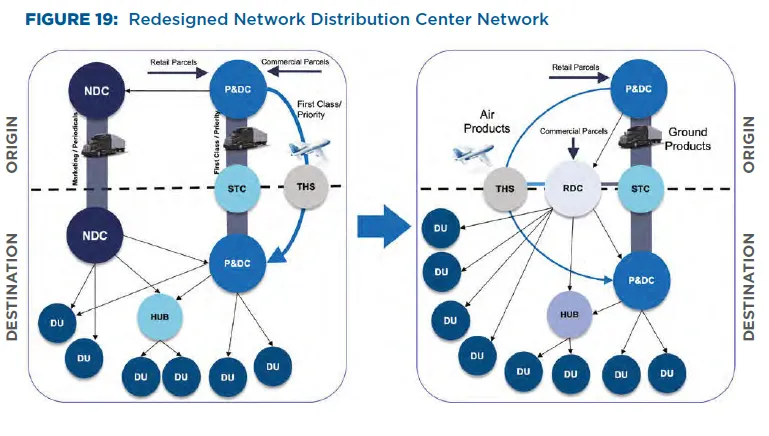
The goal of this analysis is not to advocate for minimal distribution. Diversification across channels remains a sound strategic principle, and Routes4Media's own framework recognizes the value of maintaining multiple distribution routes. The goal is to ensure that each route is earning its place in the network.
For most organizations, a disciplined audit of this kind reveals two or three platforms that are consuming resources disproportionate to their contribution. Redirecting that investment — toward owned channels, toward deeper audience engagement on fewer platforms, or toward the content quality that drives organic growth — typically produces better outcomes than continued expansion.
Distribution is infrastructure. And like any infrastructure investment, it deserves the same rigorous financial scrutiny applied to any other operational cost.