The 72-Hour Cliff: How Platform Algorithms Bury Your Best Content and What to Do About It

There is a quiet crisis happening inside the content libraries of publishers and creators across the United States. Carefully researched articles, well-produced videos, and thoughtfully crafted newsletters are going live, generating a brief spike of engagement, and then effectively vanishing — not deleted, not retracted, simply rendered invisible by the algorithmic mechanics of the platforms that host them.
The timeline is remarkably consistent. Research into content performance across major social and publishing platforms suggests that most pieces lose between 70 and 90 percent of their total organic reach within 72 hours of publication. After that window closes, the content does not cease to exist. It simply stops being surfaced. It becomes, in practical terms, a digital artifact rather than a living asset.
For any organization that invests significant resources in content creation, this pattern represents a structural problem that neither better writing nor more frequent posting can solve on its own.
Why Algorithms Favor the New Over the Good
To address the problem, it helps to understand its origin. Most major platforms — whether social networks, video hosts, or content aggregators — are built around engagement signals measured in real time. Clicks, shares, comments, and watch time are tallied in the hours immediately following publication. This data informs how widely the platform distributes the content to secondary audiences.
The logic, from the platform's perspective, is defensible. Fresh content keeps users returning. A platform that surfaces two-year-old posts risks feeling stale. But this architecture creates a fundamental misalignment between platform incentives and creator economics. Platforms benefit from high publishing velocity. Creators, on the other hand, benefit most when individual pieces of content generate sustained returns over time.
The result is a distribution model that effectively penalizes depth and rewards volume — which is precisely the opposite of what most quality-focused publishers are trying to build.
The Compounding Cost of Algorithmic Decay
The financial implications of this dynamic are rarely calculated explicitly, but they are substantial. Consider a mid-sized media operation that publishes four long-form pieces per week. Each piece requires research, writing, editing, and promotion — a conservative estimate might place the all-in cost per article at $400 to $800 when staff time is accounted for properly.
If each of those articles reaches peak distribution within 72 hours and then effectively disappears from organic circulation, the organization is continuously repurchasing attention it has already paid to earn. There is no compounding return. The archive grows, but it does not work.
This is the content graveyard problem in its most concrete form: a growing inventory of published work that generates almost no ongoing value.
Building a Secondary Distribution Architecture
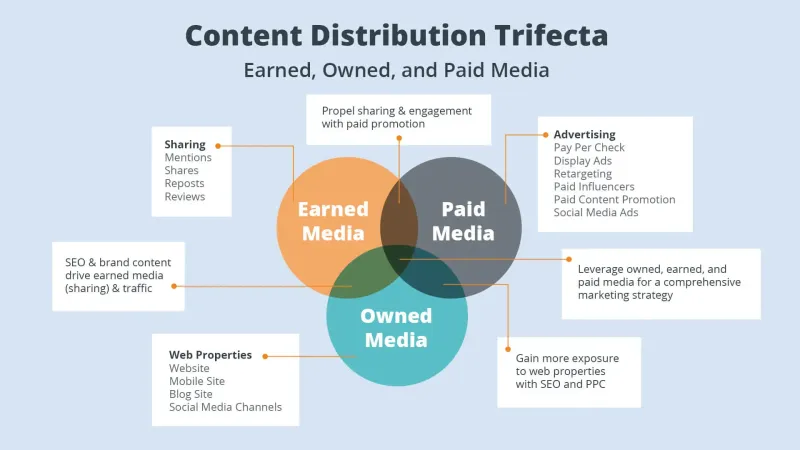
The strategic response is not to publish less or to abandon platforms that operate on recency-weighted algorithms. It is to build a deliberate secondary distribution layer that operates independently of those algorithms.
This framework has several components.
Scheduled republication windows. Rather than treating publication as a single event, treat it as the opening of a distribution sequence. A piece published on a Tuesday might be redistributed through a newsletter two weeks later, reposted to a secondary social channel six weeks out, and pitched for syndication to a relevant industry publication three months after that. The content does not change; the distribution timeline extends.
Evergreen identification and tagging. Not all content ages at the same rate. A piece tied to a breaking news cycle has a short shelf life by design. A piece that explains a durable concept or addresses a perennial audience question can remain relevant for years. Organizations that systematically tag their archives by evergreen potential are able to build automated or semi-automated redistribution queues that keep older content circulating without requiring editorial intervention for every piece.
Platform-specific archival optimization. Some platforms offer mechanisms that favor content discovery outside the recency window — search-optimized blog posts, Pinterest pins, and YouTube videos with strong keyword structures can continue generating traffic long after the initial publication date. Routing content through these channels as part of a standard distribution plan extends the reach timeline considerably.
Email as a long-term distribution engine. Owned email lists remain one of the most reliable mechanisms for delivering content directly to an audience without algorithmic intermediation. A well-maintained newsletter can reintroduce older content to subscribers who missed it on first publication, or to newer subscribers who joined after a piece originally ran. This is not repurposing in the creative sense — it is simply using a direct channel to extend the distribution window of content that has already been produced.
Repurposing Is Not the Same as Redistribution
It is worth drawing a clear distinction here between two strategies that are often conflated. Repurposing involves transforming content into a new format — turning a long-form article into a short video, a podcast episode into a written transcript, or a research report into an infographic series. Redistribution involves moving the same content through additional channels or time windows without fundamentally altering its form.
Both strategies have merit, and both address the 72-hour cliff problem in different ways. Repurposing creates new entry points for audiences who prefer different formats or consume content on different platforms. Redistribution extends the life of content within its existing format by ensuring it reaches audiences who were not present during the initial publication window.
A complete content longevity strategy incorporates both, but they require different resources and different planning timelines. Organizations with limited bandwidth may find redistribution the more immediately actionable approach, since it does not require additional production work.
Measuring Content Lifespan as a Performance Metric
Perhaps the most important operational shift is one of measurement. Most content teams track performance in terms of the metrics platforms provide by default — page views in the first week, social shares in the first 48 hours, video completions in the first three days. These metrics are useful, but they are also inherently biased toward recency.
A more complete performance picture includes trailing metrics: traffic generated by a piece over 30, 90, and 180 days. Search ranking position over time. Newsletter click-through rates when a piece is redistributed. These figures tell a fundamentally different story about content value and allow publishers to make better decisions about where to invest production resources.
Content that performs well over time is worth more than content that spikes and disappears, even if the initial numbers look similar. Building measurement systems that capture this distinction is a prerequisite for making distribution decisions that reflect actual return on investment.
The Route Beyond the Algorithm
Platform algorithms will continue to favor freshness. That is an architectural reality, not a policy that is likely to change. The question for publishers and content creators is not how to fight that tendency, but how to build distribution infrastructure that operates alongside it — capturing the initial algorithmic window while simultaneously routing content through channels that do not depend on it.
The content graveyard is not inevitable. It is the predictable result of treating publication as an endpoint rather than a beginning. Organizations that redesign their distribution logic around the full lifespan of a piece — not just its launch moment — will find that their archives become assets rather than archives. The work they have already done will continue to work for them, long after the 72-hour window has closed.