When Wider Reach Produces a Narrower Audience: The Hidden Logic of Platform Overexpansion
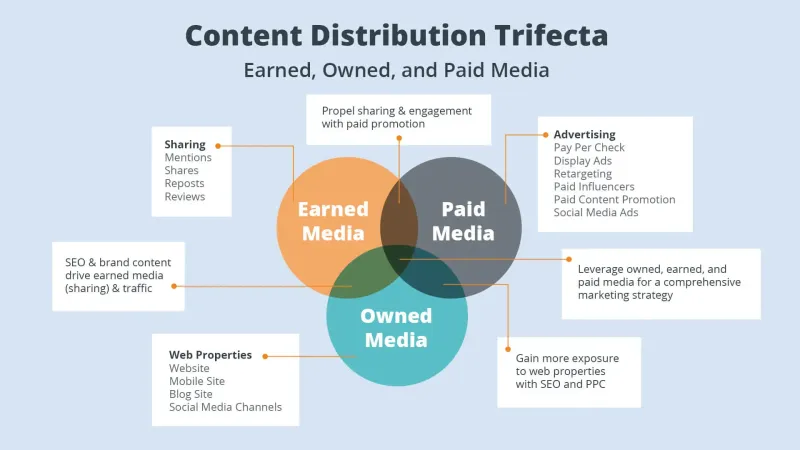
Photo: content distribution strategy network diagram overwhelmed creator multiple platforms, via justcreative.com
The Instinct to Expand Is Not Always the Instinct to Grow
For most content creators and publishers operating in today's media environment, the default assumption is straightforward: more distribution equals more reach, and more reach equals a larger audience. It is a logical premise rooted in traditional broadcast thinking. Cast a wider net, and you catch more fish.
But the modern content distribution landscape does not behave like an open ocean. It behaves more like a series of interconnected reservoirs, each governed by its own rules, its own current, and its own ecosystem. When you attempt to fish in all of them simultaneously, you often find that your resources thin out faster than your audience grows. The result is a phenomenon that experienced distribution strategists have begun calling the syndication paradox: the counterintuitive outcome where aggressive multi-platform expansion produces a smaller, less engaged total addressable audience than a more selective approach would have yielded.
Understanding why this happens — and how to calculate the precise point at which expansion becomes contraction — is one of the most consequential strategic decisions a content operation can make.
How Algorithmic Dilution Quietly Undermines Your Efforts
Every major content platform in the United States — from YouTube and LinkedIn to Apple Podcasts and Substack — operates on algorithmic systems that reward consistency, engagement velocity, and audience retention. These systems are not neutral. They actively evaluate how your content performs relative to your own historical baseline, and they adjust your distribution accordingly.
When a publisher spreads their content production across fifteen platforms, the mathematics of attention become unforgiving. The same creative team producing the same volume of content is now dividing its promotional energy, its community engagement hours, and its analytical focus across a far greater number of surfaces. Each platform receives a fraction of the attention it requires to signal strong performance to its algorithm.
The result is not fifteen audiences growing in parallel. It is fifteen algorithms quietly downranking content that fails to generate the engagement velocity they expect. A piece that might have performed exceptionally well on two well-managed platforms instead performs adequately — or poorly — across a dozen neglected ones. The aggregate reach is lower, not higher.
This is algorithmic dilution: the erosion of per-platform performance caused by spreading distribution effort too thin.
Platform Cannibalization and the Audience Overlap Problem
Beyond algorithmic mechanics, there is a structural problem that many creators underestimate: their audiences on different platforms are not entirely distinct populations. According to research consistently cited across the US media industry, significant portions of any given creator's followers on Platform A are also followers on Platform B, Platform C, and beyond.
When you syndicate identical content across all three, you are not tripling your impressions among unique individuals. You are serving the same person the same content multiple times, which carries its own cost. Audience members who encounter redundant content across platforms begin to disengage. They unfollow on the platform they check least frequently. They mute notifications. They downgrade the mental priority they assign to your brand.
This is platform cannibalization: the process by which your own distribution channels compete with one another for the same finite pool of audience attention. The more platforms you add to your syndication stack, the more aggressively your channels cannibalize each other, and the smaller your genuinely engaged audience becomes relative to your nominal follower count.
Audience Fragmentation and the Engagement Depth Trade-Off
There is a third mechanism at work, and it operates on the audience's side of the equation rather than the platform's. When people discover a creator or publisher across multiple platforms, they tend to form shallower relationships with that content brand than people who follow a creator on one or two primary channels.
This is not arbitrary. Depth of engagement is a function of habitual behavior. A reader who encounters your newsletter every Tuesday morning builds a routine around that interaction. A listener who knows your podcast drops every Thursday develops anticipatory loyalty. These behavioral grooves are what convert casual consumers into advocates who share your content, recommend your brand, and return without being prompted.
Fragmented audiences — spread across many platforms, each receiving irregular or diluted content — rarely develop those grooves. The relationship remains transactional and shallow. When an algorithm stops surfacing your content, or when a platform loses relevance, those audience members simply drift away. They were never deeply enough engaged to seek you out independently.
The aggregate effect is an audience that looks large on a spreadsheet but behaves small in practice: low open rates, low share rates, low conversion, and low resilience against platform disruptions.
Calculating Your Optimal Platform Ceiling
The practical question, then, is not whether to syndicate, but how much syndication is optimal for your specific operation. There is no universal answer, but there is a repeatable framework for arriving at one.
Step one: Audit your current engagement depth, not just reach. For each platform where you currently distribute, calculate your engagement rate relative to your follower or subscriber count. Identify the two or three platforms where that ratio is highest. Those are your core channels — the distribution routes where your audience relationship is genuinely productive.
Step two: Measure your team's platform management capacity honestly. Each platform requires not just content delivery, but active community management, performance monitoring, and iterative optimization. Assign a realistic hour-per-week figure to what genuine platform stewardship requires. Divide your available team hours by that figure. The resulting number is a rough ceiling for how many platforms you can manage without diluting quality.
Step three: Map your audience overlap. Use available analytics tools — native platform insights, UTM tracking, email list cross-referencing — to estimate what percentage of your audience on secondary platforms already follows you on your primary channels. Any platform where overlap exceeds sixty percent is likely cannibalizing rather than expanding your reach.
Step four: Apply a diminishing returns test. For each platform you are considering adding or retaining, ask: what is the estimated volume of net new, non-overlapping audience members this platform is likely to deliver over the next twelve months, given the engagement investment required? If the answer does not justify the cost, that platform belongs off your active distribution roster.
The Strategic Value of Deliberate Restraint
The creators and publishers who consistently build the largest engaged audiences in competitive US media markets are rarely the ones distributing everywhere. They are the ones who have identified their highest-value distribution routes, invested in those channels with discipline, and resisted the cultural pressure to be omnipresent.
Deliberate restraint is not a conservative strategy. It is a high-conviction one. It means concentrating your distribution energy where it compounds most effectively, rather than dispersing it across surfaces where it evaporates.
The syndication paradox will continue to trap content operations that mistake activity for strategy. The antidote is not less ambition — it is more precision. Know your platform ceiling. Respect it. And invest the energy you save from abandoning underperforming channels into deepening the audience relationships that actually drive long-term growth.
At Routes4Media, we work with publishers and creators to map distribution networks that prioritize engagement depth alongside reach. The most effective content routes are not always the most numerous ones — they are the ones that consistently deliver your content to audiences who are genuinely prepared to receive it.