Provenance Before Publication: A Pre-Flight Inspection Protocol for AI-Assisted Content

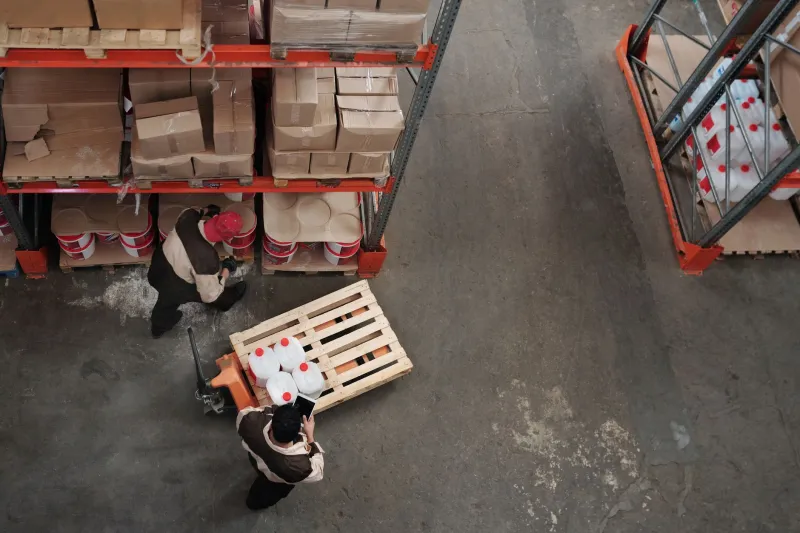
Photo: Presidents office maldives, CC0, via Wikimedia Commons
Freight carriers moving goods between states expect to pass through a weigh station. The stop is not an accusation; it is a routine checkpoint that confirms the load matches the paperwork. Content distribution has reached a similar moment. Anything produced with or alongside generative tools now travels through platform review systems that read metadata, sample frames, and compare language against disclosure policies. Passing that scrutiny is no longer automatic.
The practical response is not to avoid AI-assisted production. It is to build an inspection lane: a short, documented checkpoint that every asset clears before scheduling. Four stations, one sign-off, and a record that travels with the file.
Why provenance became a distribution issue
Through 2025 and into 2026, the major distribution surfaces converged on a common posture: label synthetic media, ask creators to self-disclose, and reduce recommendation exposure where confidence in origin is low. The enforcement tools vary by platform, but the underlying question is consistent — where did this come from, and who stands behind it?
For publishers, that question has a reach consequence. An asset that arrives without verifiable origin may be labeled automatically, muted in recommendations, or flagged for manual review that stalls a launch window. The cost is rarely a dramatic ban. It is the quieter outcome: a piece that publishes on time and then underperforms because a review system could not confirm what it was looking at.
Station one: origin and the source log
Inspection begins with the record, not the file. Every asset should carry a source log that answers four questions in plain language:
- Which portions were generated, assisted, or untouched?
- Which model or tool produced each generated portion, and when?
- Who prompted, edited, and approved the final version?
- What source material, if any, was used as input?
The log does not need to be elaborate. A structured note attached to the asset record is sufficient. What matters is that the answer exists before anyone asks, and that it matches what the file itself claims.
Station two: rights and clearances
Synthetic voice and likeness are the fastest route to a takedown and the slowest to repair. Before an asset moves forward, confirm written permission for any recognizable person, any cloned or synthesized voice, and any trademarked or protected visual element. Confirm as well that the license terms of any stock or archival input permit use in generated or transformed work; several standard licenses restrict this, and the restriction survives the edit.
Where the source material itself was machine-produced, document the commercial terms under which the tool may be used and whether output carries indemnification. This is the station most often skipped under deadline pressure, and it is the one most likely to generate a legal claim rather than a policy flag.
Station three: metadata integrity
Content Credentials built on the C2PA standard are the closest thing the industry has to a shipping manifest. They record assertions about origin, editing history, and the signing identity of the publisher. When intact, they let a platform verify provenance without guessing.
The catch is fragility. Transcoding, re-encoding, and screenshotting routinely strip embedded manifests. A file that arrived signed at the editing desk may reach the platform as a bare export. The inspection lane should therefore verify three things: that the manifest is present at export, that the signing certificate is current, and that the upload path preserves the original rather than a re-compressed intermediate.
Where a platform strips metadata on ingest — many do — the disclosure must live in the content and the caption as well, not only in the file.
Station four: disclosure language
Disclosure is a drafting task, not an afterthought. Each destination has its own expectations about phrasing, placement, and whether the label belongs in the first frame, the caption, or both. Build a short library of approved sentences for each channel and keep them adjacent to the publishing checklist.
Three rules hold across destinations. Say what was generated, not merely that a tool was involved. Place the disclosure where a viewer encounters it before forming an impression, not in a comment thread. And keep the language consistent across channels so that a viewer who follows you on two platforms sees the same claim in both places.
The sign-off: who owns the hold point
An inspection lane without an owner becomes a suggestion. Assign a provenance steward — often an editor rather than a technologist — who holds authority to delay publication when a station is incomplete. The hold does not need to be long. Most gaps close in under an hour when someone is accountable for closing them.
On smaller teams, the steward role can rotate weekly, provided the checklist stays fixed. Rotation spreads familiarity with the rules and prevents a single point of failure during vacation season.
A one-page inspection record
The deliverable is a single page per asset, retained with the publishing record: the source log, the clearance confirmations, a note on manifest status at export, and the approved disclosure text. Six months later, when a platform asks a question or a client requests documentation, that page is the answer.
Publishers who treat provenance as paperwork tend to discover its value at the worst possible moment. Those who treat it as a routine weigh station find that the stop takes minutes, the load moves cleanly, and the reach they earned is not quietly discounted by a system that could not confirm the shipment.