The Clearance Lane: A Pre-Launch Compliance Route for Every New Platform
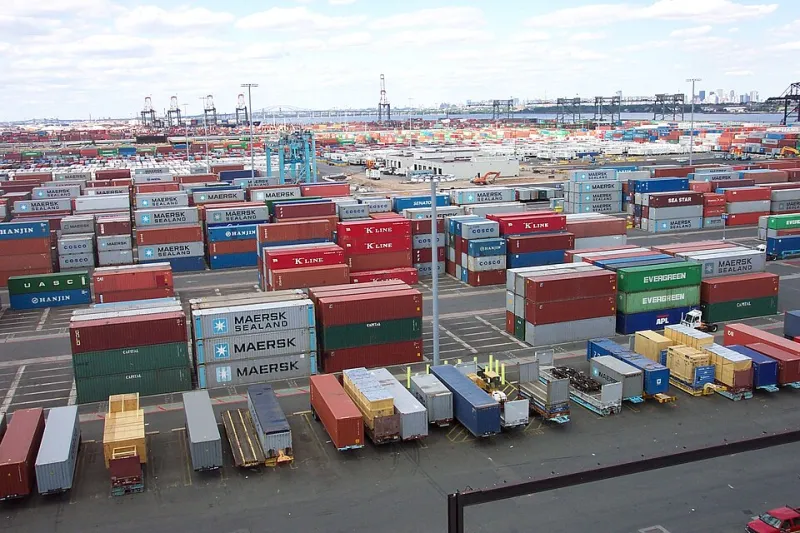
Photo: Captain Albert E. Theberge, NOAA Corps (ret.), Public domain, via Wikimedia Commons
When a publisher adds a channel, the announcement usually arrives before the paperwork. Someone posts, the post performs, and then a rights holder, an affiliate compliance reviewer, or a platform trust-and-safety queue surfaces a problem that was present at the moment of upload. The correction that follows costs more than the launch did.
Customs officials solved this problem decades ago. No shipment crosses a border on the assumption that the manifest can be corrected later. It clears first. Content distribution deserves the same discipline, and it does not require a legal department to build.
What a Clearance Lane Actually Is
A clearance lane is a fixed sequence of checks that every asset passes through before it is routed to a platform. It is not a committee, and it is not a final read-through. It is a documented route with defined inspection points, an owner at each point, and a rule that nothing bypasses the lane without a recorded exception.
The distinction matters because most teams already perform these checks. They simply perform them out of order, under time pressure, or after the platform has already made a decision on the content's behalf. A takedown is a customs seizure in slow motion: the goods existed, the demand existed, and the shipment still failed.
The Four Inspection Points
Rights and chain of title
Establish who owns what before the asset leaves the building. That includes the obvious licenses and the less obvious ones: stock footage that expires, music cleared for organic use but not for paid amplification, contributor agreements that did not contemplate syndication, and interview releases that name a specific platform. A clearance lane records the scope of each right next to the asset, so a later distribution decision can be checked against it in seconds rather than hours.
Disclosure and material connection
The Federal Trade Commission's endorsement guidance does not care whether a partnership felt casual. If a creator received payment, product, or anything else of value, and the audience could reasonably read the content as an endorsement, the disclosure must be clear, conspicuous, and unavoidable. Disclosure placed below a fold, buried in a hashtag block, or confined to a linked page is a recurring source of enforcement attention.
Route disclosure through the lane as an item to be confirmed against the specific platform's native tools. Many platforms now provide built-in paid-partnership labels; using them is usually stronger than text alone, and in some cases the label is required. Check the label, the spoken or on-screen disclosure, and the caption together. All three should agree.
Metadata and labeling
Metadata is the customs declaration of content: it describes the shipment to parties who will never open it. Broken canonical tags, missing alt text, stale author attributions, and descriptions that contradict the asset itself all create downstream confusion for platforms, aggregators, and search systems. The lane should confirm a short, standard metadata set before routing, and should reject assets whose declarations do not match their contents.
Format and technical specification
Aspect ratios, caption safe zones, audio loudness, file naming conventions, and duration limits differ across every destination in the stack. Most rework in a launch week comes from this checkpoint alone. Pre-encoding a master file and its required derivatives at clearance time removes the scramble that otherwise occurs when a launch is announced before the assets are ready.
Building the Lane in Five Steps
- Map the destinations. List every platform receiving the asset, including the ones receiving it later. A lane built only for today's launch will be bypassed next month.
- Write the checklist as a single page. If the lane cannot be read in under two minutes, it will be skipped. Four inspection points, each with three to six binary questions, is sufficient for most publishers.
- Assign one owner per checkpoint. Rights questions belong to whoever maintains the contracts; disclosure belongs to whoever owns the brand relationship; metadata and format belong to production. One person can hold several checkpoints, but every checkpoint needs a name.
- Define the exception path. Some content must ship fast. Decide in advance who may authorize a bypass, what they must record, and how the exception gets reviewed afterward. Undocumented exceptions are how lanes quietly die.
- Log every clearance. A timestamped record of what was checked, by whom, and against which platform's requirements turns a compliance question into a lookup rather than an investigation.
What the Lane Is Not
It is not a gatekeeping function designed to slow publishing down. The evidence from most distribution operations runs the other way: content that clears before routing launches faster overall, because the rework, takedowns, and appeals that consume launch-week capacity never occur. The lane also should not become a second editorial review. Editorial quality and clearance are separate judgments, and conflating them produces a checkpoint that is both slow and inconsistently applied.
Measuring Whether It Works
Four numbers will tell you within a quarter whether the lane is earning its place. Track takedowns and content removals per hundred assets published. Track the average number of hours between asset completion and platform live date. Track rework tickets attributable to format or metadata errors. Track the percentage of assets that cleared on first pass.
If removals fall, time-to-live shortens, rework declines, and first-pass clearance climbs, the lane is doing exactly what a well-run border does: moving legitimate goods quickly while keeping the problems on the near side of the line. In 2026, where a single platform decision can undo a week of distribution work, that is not bureaucracy. It is routing.